

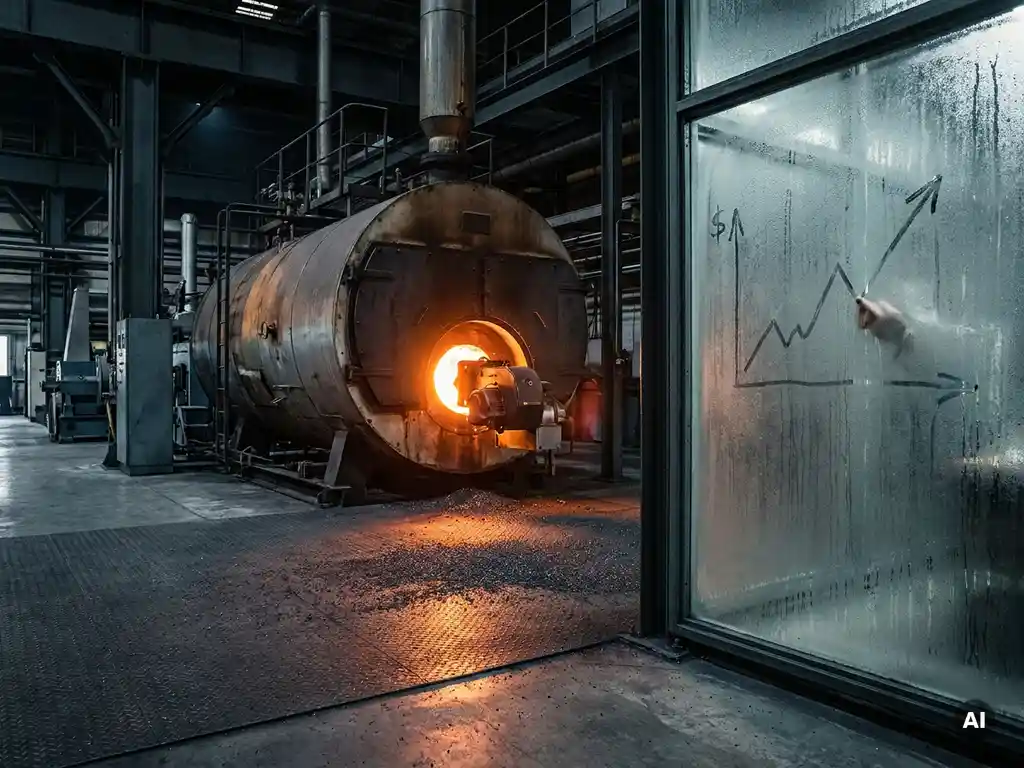
Rising carbon costs make the economics of industrial heat decarbonization increasingly favorable for clean alternatives. As the EU Emissions Trading System (EU ETS) drives up the price of emitting CO₂, the cost gap between fossil-fuel-fired heat and decarbonized alternatives narrows, and in some scenarios, reverses entirely. For sustainability managers in energy-intensive industries, understanding how carbon pricing reshapes the business case is no longer optional. Below, we unpack the key questions driving that conversation in 2026.
How do carbon costs actually show up in industrial energy budgets?
Carbon costs enter industrial energy budgets primarily through the EU ETS, which requires companies to purchase allowances for every tonne of CO₂ they emit. For heat-intensive operations running on natural gas, coal, or fuel oil, this creates a direct and growing line item: the higher the carbon price, the more expensive it becomes to keep burning fossil fuels. In practice, this cost shows up as an add-on to fuel procurement costs and is increasingly material at current allowance prices.
For sustainability managers, the challenge is that carbon costs are not always visible as a separate budget line. They are often embedded in energy procurement contracts or absorbed at group level, making it harder to build a clear business case for switching fuels. Making carbon costs explicit, and projecting them forward based on ETS price trajectories, is often the first step toward a credible decarbonization investment case.
The EU ETS also interacts with other regulatory pressures. The revised Energy Efficiency Directive now extends mandatory energy audit obligations to companies above certain consumption thresholds, regardless of size. Combined with carbon pricing, this creates a regulatory environment where the cost of inaction compounds over time.
At what carbon price does decarbonized heat become cost-competitive?
The carbon price at which decarbonized heat becomes cost-competitive with fossil alternatives depends on the specific technology, the baseline fuel, and the efficiency of the system replacing it. As a general principle, the higher the carbon intensity of the incumbent fuel and the more efficient the clean alternative, the lower the carbon price needed to reach parity. For many industrial heat applications, the crossover point falls within the range that EU ETS prices have already reached or are projected to reach in the near term.
Efficiency plays a critical role in this calculation. A clean heat system that achieves up to 95% energy efficiency, as demonstrated by RIFT’s Iron Fuel Boiler at TRL7 scale, requires less fuel input per unit of useful heat delivered, which compresses the cost gap with fossil alternatives even before carbon pricing is factored in. When carbon costs are added on top of that efficiency advantage, the economics shift further in favor of the clean option.
It is also worth noting that the EU Innovation Fund, which has supported RIFT’s own development, is being strengthened as part of the Clean Industrial Deal, with the Commission proposing an industrial decarbonisation bank targeting €100 billion in funding. This kind of public financing reduces the effective cost of transitioning, lowering the carbon price threshold at which decarbonized heat becomes the rational economic choice.
How do rising carbon costs compare across different decarbonization technologies?
Rising carbon costs affect different decarbonization technologies differently, depending on their capital requirements, fuel costs, infrastructure dependencies, and emission profiles. Electrification, hydrogen, and solid fuel alternatives like iron fuel each respond to carbon pricing in distinct ways, and the right comparison depends heavily on the industrial context.
Electrification and grid-based heat
Electrification benefits from carbon pricing when the grid is decarbonized, but in 2026, many European industrial grids still carry a carbon intensity that limits the full benefit. Beyond emissions, electrification for heat faces structural barriers: grid congestion, high connection costs, and volatile energy prices make it an uncertain proposition for companies with high and continuous heat demand. The CAPEX versus OPEX decision for electrification is complex, and infrastructure constraints often make it impractical regardless of carbon price levels.
Hydrogen and iron fuel as fossil gas replacements
Hydrogen is often cited as the primary replacement for natural gas in industrial heat, but infrastructure limitations and production costs remain significant obstacles for most industrial sites in 2026. Iron fuel, a circular, solid energy carrier, offers a different profile: it can be transported in standard containers, does not require new pipeline infrastructure, and integrates with existing boiler setups. When carbon costs rise, technologies that avoid the infrastructure bottlenecks of hydrogen gain a relative advantage in total cost of ownership. The full Iron Fuel Technology chain delivers a CO₂ reduction of 0.55 tCO₂eq per tonne of iron fuel produced, calculated using EU definitions for low-carbon hydrogen and the EU Innovation Fund GHG methodology, a metric directly relevant for carbon accounting and regulatory reporting.
What happens to the business case when carbon prices keep rising?
When carbon prices keep rising, the business case for decarbonized industrial heat strengthens continuously, and the cost of delay grows in parallel. Every year a facility continues to operate fossil-fuel-fired heat, it accumulates carbon costs that a decarbonized alternative would have avoided. Over a typical asset lifecycle of ten to twenty years, the cumulative difference in carbon expenditure becomes a dominant factor in the investment comparison.
This dynamic also affects how sustainability managers should structure their internal business cases. A static cost comparison based on today’s carbon price will understate the long-term value of switching. A forward-looking model that incorporates projected ETS price trajectories, including the tightening of the cap under the EU Clean Industrial Deal, will typically show a significantly stronger return on investment for clean heat technologies.
There is also a risk dimension to consider. Companies that delay decarbonization lock in exposure to carbon price volatility. Those that transition earlier gain cost predictability, which is increasingly valued by boards and investors assessing climate-related financial risk.
Which industrial sectors feel the sharpest carbon cost pressure on heat?
The industrial sectors that feel the sharpest carbon cost pressure on heat are those with high thermal energy demand, limited ability to electrify, and significant exposure to the EU ETS. Food and beverage, specialty chemicals, and pulp and paper consistently rank among the most exposed, because they require continuous, high-temperature heat that cannot easily be interrupted or replaced with intermittent renewable electricity.
Several factors determine the intensity of carbon cost pressure in a given sector:
- Heat temperature requirements: Processes requiring temperatures above 200°C are harder to electrify and more dependent on combustion-based heat, increasing ETS exposure.
- Production continuity: Industries with 24/7 operations have limited flexibility to shift loads or tolerate supply interruptions, making security of supply a critical factor alongside carbon cost.
- Carbon intensity of the incumbent fuel: Facilities running on coal or heavy fuel oil face higher carbon costs per unit of heat than those already on natural gas, but even gas-fired heat becomes increasingly expensive as ETS prices rise.
- Regulatory visibility: Sectors with high public and investor scrutiny face reputational pressure that compounds the financial incentive to decarbonize.
For sustainability managers in these sectors, the combination of carbon cost exposure and infrastructure constraints, particularly around grid congestion and hydrogen availability, makes the search for practical, drop-in-compatible decarbonization solutions especially urgent.
How should sustainability managers factor carbon costs into a decarbonization business case?
Sustainability managers should factor carbon costs into a decarbonization business case by treating them as a forward-looking, escalating cost rather than a fixed input. The starting point is quantifying current EU ETS expenditure for heat-related emissions, then projecting that cost forward under conservative, base, and high carbon price scenarios. The difference between those projections and the cost of a decarbonized alternative defines the financial value of acting sooner rather than later.
A robust business case for replacing fossil heat typically includes the following elements:
- Baseline carbon cost audit: Calculate current annual ETS allowance costs attributable to heat generation, broken down by process and fuel type.
- Forward carbon price scenarios: Model the business case under at least three ETS price trajectories, reflecting regulatory ambition under the Clean Industrial Deal.
- Total cost of ownership comparison: Include CAPEX, OPEX, fuel costs, and avoided carbon costs for each technology option, not just headline investment figures.
- Infrastructure risk assessment: Evaluate whether electrification or hydrogen are realistically available given grid congestion, connection timelines, and local infrastructure maturity.
- Regulatory and subsidy landscape: Factor in available support, including EU Innovation Fund grants and national decarbonization incentives, which can materially shift the investment threshold.
- Operational continuity requirements: Assess which technologies can integrate with existing boiler infrastructure without disrupting production, a critical factor for industries where downtime carries significant cost.
Building this kind of structured case also makes it easier to communicate to boards and finance teams, who increasingly need to see decarbonization investments framed in terms of risk reduction and long-term cost certainty, not just emissions targets.
How Iron Fuel Technology helps with the decarbonization of industrial heat
For sustainability managers navigating rising carbon costs, the right technology partner needs to offer more than just low emissions: it needs to be practical, efficient, and compatible with how industrial facilities actually operate. That is exactly where we come in.
Our Iron Fuel Technology is designed specifically for the realities of industrial heat decarbonization:
- Grid-independent heat: Iron fuel combustion requires no connection to the electricity grid, making it resilient to grid congestion and volatile energy prices.
- Up to 95% energy efficiency: Our Iron Fuel Boiler achieves up to 95% energy efficiency at TRL7 demonstration scale, outperforming many fossil fuel systems on a pure energy basis.
- Near-zero direct CO₂ emissions: Combustion produces just 10 kg of CO₂ per MWhth, stemming solely from the pilot safety flame, not from the iron fuel itself.
- Drop-in compatible: The Iron Fuel Boiler is designed to complement existing boiler infrastructure, reducing the disruption and capital risk of transitioning.
- Reliable fuel supply: Iron fuel is safe to transport in standard containers and is backed by a long-term supply agreement model, supporting security of supply without new pipeline infrastructure.
- Proven commercial traction: We signed the world’s first commercial contract for industrial Iron Fuel Technology with Kingspan Unidek, proof that this is not a future concept but a deployable solution today.
If you are building a decarbonization business case and want to understand how Iron Fuel Technology fits your specific heat profile and carbon cost exposure, get in touch with our team to start the conversation.
Frequently Asked Questions
How volatile are EU ETS carbon prices, and how should we plan for uncertainty in our business case?
EU ETS carbon prices have historically shown significant volatility, influenced by policy changes, energy market shifts, and macroeconomic conditions. Rather than building a business case on a single price assumption, sustainability managers should model at least three scenarios — conservative, base, and high — aligned with published trajectories from the European Commission and independent analysts. This scenario-based approach not only stress-tests the investment but also helps communicate risk to boards and finance teams in a language they understand: cost certainty versus continued exposure.
What is the difference between direct and indirect carbon costs for industrial heat, and why does it matter?
Direct carbon costs arise from your facility’s own combustion emissions covered under the EU ETS, while indirect carbon costs come from purchased electricity or heat that carries an embedded carbon price. For industrial heat applications, direct costs are typically the dominant factor, especially for sites burning natural gas, coal, or fuel oil on-site. Understanding this distinction matters because it determines which budget lines are most exposed to rising carbon prices and which decarbonization levers will deliver the greatest financial relief.
How do we get started with evaluating iron fuel or other decarbonized heat technologies for our site?
The practical starting point is a baseline carbon cost audit: quantify how much your facility currently spends on EU ETS allowances attributable to heat generation, broken down by process and fuel type. From there, you can run a total cost of ownership comparison for candidate technologies — including CAPEX, OPEX, fuel costs, and avoided carbon expenditure — under multiple carbon price scenarios. Engaging directly with technology providers like Iron Fuel Technology at this stage is valuable, as they can assess compatibility with your existing boiler infrastructure and model the economics for your specific heat profile.
What are the most common mistakes sustainability managers make when building a decarbonization business case?
The most common mistake is using today’s carbon price as a static input rather than projecting it forward across the asset’s full lifecycle — a ten-to-twenty-year horizon where ETS prices are widely expected to rise significantly under the Clean Industrial Deal. A second frequent error is focusing solely on headline CAPEX without accounting for avoided carbon costs, infrastructure risks, and operational continuity requirements, which can dramatically change which technology wins on total cost of ownership. Finally, many teams underestimate the value of regulatory support mechanisms like EU Innovation Fund grants, which can materially lower the investment threshold for clean heat technologies.
Can decarbonized heat technologies like iron fuel realistically meet 24/7 continuous heat demand in industrial operations?
Yes — and production continuity is precisely why technologies like iron fuel are designed to integrate with existing boiler infrastructure rather than replace it wholesale. Iron fuel combustion provides on-demand, dispatchable heat that is not dependent on grid availability or intermittent renewable supply, making it well-suited to industries with continuous, high-temperature heat requirements. The drop-in compatibility of the Iron Fuel Boiler means facilities can transition without the extended downtime or infrastructure overhaul that electrification or hydrogen retrofits often require.
How does the EU Clean Industrial Deal affect the timeline and urgency for making a decarbonization investment decision?
The Clean Industrial Deal is tightening the EU ETS cap over time, which means carbon prices are structurally expected to rise — and with them, the cost of delaying decarbonization. The deal also strengthens the EU Innovation Fund, with the Commission proposing an industrial decarbonisation bank targeting €100 billion in funding, creating a time-sensitive window to access grants and subsidies that can significantly reduce the effective cost of transitioning. Companies that build and act on their business cases earlier will benefit from both lower carbon cost accumulation and greater access to public financing before it is fully allocated.
How should we account for carbon costs when comparing iron fuel against hydrogen or electrification in a technology selection process?
The comparison should go beyond the carbon cost line and include the full infrastructure cost picture: grid connection timelines and congestion risks for electrification, hydrogen pipeline availability and production cost premiums, and the transport and storage logistics for solid fuel alternatives like iron fuel. Carbon pricing favors all three over fossil fuels, but the total cost of ownership — including CAPEX, infrastructure investment, fuel supply security, and avoided ETS expenditure — often tells a very different story depending on your site’s location and existing infrastructure. For sites where grid congestion or hydrogen unavailability is a real constraint, technologies that bypass those bottlenecks can reach cost-competitiveness at a lower effective carbon price.
Related Articles
- How does the EU ETS create financial pressure to decarbonize industrial heat?
- What is EIA in America?
- Is renewable energy affordable for the average household?
- What is the energy transition and why does it matter?
- What is renewable energy?
This content was generated with the help of AI and it may contain mistakes