

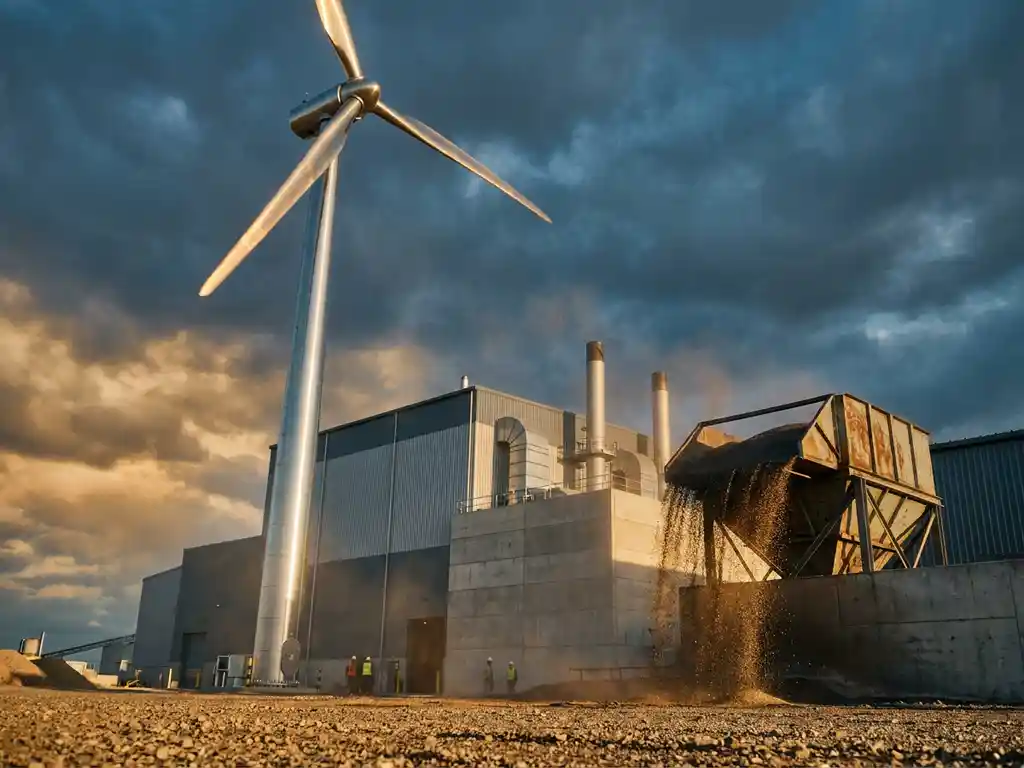
Renewable energy improves energy security by reducing dependence on imported fossil fuels, which are subject to price volatility and supply disruptions. When companies and countries generate energy from domestic or diversified renewable sources, they gain greater control over their energy supply. For industrial companies in particular, this shift also addresses growing regulatory pressure and the rising cost of carbon emissions under frameworks such as the EU Emissions Trading System.
Fossil fuel price swings are hitting your operating margins harder than you realise
Industrial energy costs tied to natural gas and oil move with global commodity markets, and those markets are unpredictable. A conflict in a producing region, a cold winter across Europe, or a policy shift in a major exporting country can send energy prices sharply upward within weeks. For companies running energy-intensive processes, that volatility translates directly into margin compression that is difficult to plan for or absorb. The fix is not necessarily to switch everything overnight, but to reduce exposure. Diversifying your energy mix with renewable alternatives locks in more stable, long-term pricing and insulates your operations from the next price spike before it arrives.
Treating energy security as an infrastructure problem is holding back your decarbonisation progress
Many industrial companies frame energy security purely as a question of grid reliability or supply contracts. That framing misses the bigger risk: structural dependence on a single fossil fuel source that is simultaneously becoming more expensive, more regulated, and harder to justify to customers and investors. The real shift is to treat energy security as a strategic question about which energy carriers your operations will run on in five or ten years. Companies that start evaluating renewable heat alternatives now, rather than waiting for regulatory deadlines, will have more options, more lead time, and more negotiating power when those deadlines arrive.
What is energy security and why does it matter for industry?
Energy security is reliable, affordable, and uninterrupted access to the energy a company or country needs to operate. For industrial companies, it means having consistent access to the fuel or heat source that keeps production running, at a price that does not destroy margins, and through a supply chain that is not vulnerable to disruption.
Industry accounts for a significant share of total global energy consumption, and most of that energy goes toward heat generation. When the supply or price of that energy is unstable, the consequences are immediate: production slowdowns, cost overruns, and difficulty meeting delivery commitments. Energy security is not an abstract policy concern. It is a daily operational reality for plant managers and sustainability teams.
Regulatory pressure adds another layer. Frameworks such as the EU Emissions Trading System make carbon-intensive energy increasingly expensive over time. A company that depends heavily on fossil fuels for its heat processes is not just exposed to commodity price risk; it is also exposed to rising carbon costs, which compound the problem year after year.
How does dependence on fossil fuels threaten industrial energy security?
Fossil fuel dependence threatens industrial energy security through three interconnected risks: price volatility, supply concentration, and regulatory cost escalation. Natural gas and oil prices are set by global markets that industrial buyers cannot control. Supply chains run through a small number of producing regions, making them vulnerable to geopolitical disruption. And carbon pricing mechanisms make fossil fuels progressively more expensive to use.
The 2021 and 2022 energy crises in Europe illustrated how quickly these risks can materialise. Gas prices rose sharply in a short period, forcing some energy-intensive manufacturers to curtail or halt production entirely. Companies that had diversified their energy sources or locked in long-term contracts for alternatives were better positioned to absorb the shock.
There is also a longer-term structural risk. As climate regulations tighten, fossil fuel infrastructure faces stranded-asset risk. Industrial companies that invest heavily in fossil fuel-dependent equipment now may find that those assets become economically or legally problematic before the end of their expected operational life.
How does renewable energy improve energy security for industrial companies?
Renewable energy improves industrial energy security by diversifying the energy supply away from volatile fossil fuel markets, reducing exposure to carbon pricing, and enabling more predictable long-term energy costs. When renewable energy is sourced domestically or through stable supply agreements, it also reduces dependence on imports from geopolitically sensitive regions.
For companies that rely on high-temperature heat, the picture is more nuanced. Not all renewable technologies can deliver the heat levels that industrial processes require. Electrification works well for some applications but faces infrastructure constraints at scale. Hydrogen is promising but still expensive and dependent on distribution networks that are not yet widely available.
This is where newer energy carriers, including solid-state options such as iron fuel, become relevant. Iron powder can be stored and transported using existing logistics infrastructure, which means it does not require the same grid upgrades or pipeline buildout that hydrogen demands. That logistical flexibility is itself a form of energy security: it reduces the number of external dependencies a company has to manage.
Long-term fuel supply agreements for renewable energy sources also help companies plan with more confidence. When pricing is agreed in advance and supply is guaranteed, the unpredictability that characterises fossil fuel markets is substantially reduced.
If you are currently evaluating your energy exposure or considering a transition to renewable heat, the questions below can help you identify where to focus first.
What are the main challenges of switching to renewable energy in industry?
The main challenges of switching to renewable energy in industry are upfront capital costs, technology readiness for high-temperature applications, infrastructure requirements, and the cost gap between fossil fuels and cleaner alternatives. These barriers are real, but they are not uniform across all renewable technologies.
Electrification requires significant investment in electrical infrastructure and is often not practical for processes that need very high temperatures. Green hydrogen is technically capable but currently expensive and dependent on supply chains that are still being built. Biomass has geographic and sustainability constraints that limit its scalability in many regions.
Operational continuity is another concern. Industrial companies cannot afford extended production downtime during a technology transition. This is why compatibility with existing boiler infrastructure matters so much. Solutions that can integrate with or complement current equipment reduce both transition risk and upfront investment.
The cost gap between fossil fuels and renewable alternatives is narrowing, but it has not closed. Carbon pricing mechanisms help close it from the fossil-fuel side, while increasing scale and competition are bringing renewable costs down. Companies that act before regulatory pressure peaks are more likely to secure commercially attractive terms than those that wait.
Which renewable energy technologies are best suited for industrial heat?
The renewable technologies best suited for industrial heat depend on the temperature required and the existing infrastructure available. For lower-temperature applications, heat pumps and electric boilers are viable. For high-temperature processes above 500°C, the options narrow considerably to green hydrogen, biomass, and emerging solid-state energy carriers such as iron fuel.
Here is a practical overview of the main options:
- Electric boilers and heat pumps: Effective for lower-temperature heat, but face grid capacity constraints and are less practical for very high-temperature industrial processes.
- Green hydrogen: Capable of high-temperature combustion with zero direct CO₂ emissions, but currently expensive and dependent on hydrogen infrastructure that is still being developed in most regions.
- Biomass: An established technology, but limited by fuel availability, land-use concerns, and emissions from combustion that complicate its sustainability credentials.
- Iron fuel: A solid-state energy carrier that burns at temperatures up to 2,000°C with zero direct CO₂ emissions. It can be stored and transported using conventional logistics, making it less dependent on new infrastructure than hydrogen.
No single technology is the right answer for every industrial context. The most practical approach is to evaluate each option against your specific temperature requirements, existing infrastructure, and total cost of ownership, including carbon costs over the expected operational life of the equipment.
You can explore how Iron Fuel Technology works to understand how solid-state energy carriers compare technically with other high-temperature renewable heat options.
How can industrial companies start improving their energy security today?
Industrial companies can start improving their energy security by auditing their current energy dependencies, identifying where fossil fuel exposure is greatest, and evaluating which renewable alternatives are technically and commercially viable for their specific processes. The goal is not to replace everything at once, but to reduce concentrated risk and create a credible transition pathway.
A practical starting sequence looks like this:
- Map your energy exposure: Identify which processes rely on fossil fuels, what temperatures they require, and what share of your total energy cost and carbon footprint they represent.
- Assess compatibility of alternatives: For each high-exposure process, evaluate which renewable technologies can meet the temperature and volume requirements without requiring a complete infrastructure rebuild.
- Model the total cost: Include current energy costs, projected carbon pricing, and the capital cost of transition. A higher upfront investment in a renewable solution may be cheaper over a ten-year horizon than continuing with fossil fuels under tightening carbon regulations.
- Engage suppliers early: Long-term fuel supply agreements for renewable energy carriers are becoming available. Engaging suppliers early gives you more influence over pricing and supply terms.
- Start with a pilot: A partial transition on one boiler or one process line reduces risk, generates operational data, and builds internal confidence before a broader rollout.
Regulatory timelines are tightening, and the companies that begin this process now will have more options and more time to make considered decisions than those that wait for compliance deadlines to force their hand. Reviewing the industrial heat solutions available today is a useful starting point for understanding what is commercially ready versus what is still on the horizon.
How Iron Fuel Technology helps with industrial energy security
We developed Iron Fuel Technology specifically to address the gap that many industrial companies face: the need for high-temperature, carbon-free heat that works with existing infrastructure and does not require waiting for hydrogen pipelines or grid upgrades.
Here is what our approach delivers for energy security:
- Zero direct CO₂ emissions: Iron fuel combustion produces no carbon dioxide, with only 10 kg of CO₂ per MWh attributable to a pilot safety flame, compared with the much higher emissions of fossil fuel boilers.
- Up to 95% energy efficiency: Our Iron Fuel Boiler achieves an energy efficiency of up to 95%, making it one of the most efficient industrial heat solutions available.
- Drop-in compatibility: Our boiler is designed to integrate with existing infrastructure, reducing transition risk and capital requirements.
- Long-term fuel supply agreements: We offer stable, predictable pricing through long-term contracts, directly addressing the volatility that fossil fuel dependence creates.
- Circular energy carrier: Iron oxide, the only by-product of combustion, is regenerated back into iron fuel using hydrogen, completing a closed cycle with no waste.
If you are evaluating how to reduce your industrial energy risk while meeting decarbonisation targets, we would be glad to talk through what is possible for your specific situation. Get in touch with our team to start the conversation.
Related Articles
- What are the four types of EIA?
- What is the cleanest energy to use?
- What is the best clean energy?
- Can renewable energy reduce dependence on energy imports?
- How does solar energy work?
This content was generated with the help of AI and it may contain mistakes