

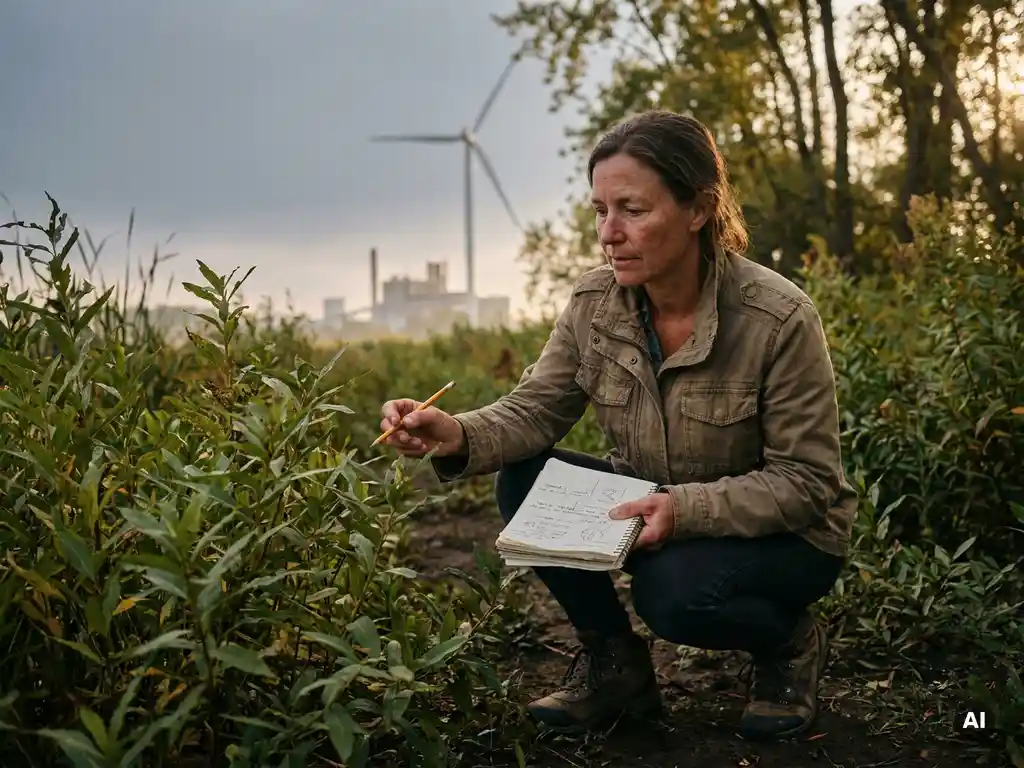
An EIA assessment, in the context of EU law, is a formal procedure that evaluates the likely environmental effects of a major development or construction project before work begins. Governed by EU Directive 2011/92/EU (as amended by 2014/52/EU), an Environmental Impact Assessment ensures that decision-makers have a clear picture of potential environmental consequences before granting approval. The sections below unpack the key questions surrounding how the EIA process works, who it applies to, and what happens when it is skipped.
Note: In the Netherlands, the abbreviation EIA is also used for the Energie-investeringsaftrek, the Dutch Energy Investment Allowance, a tax scheme for businesses investing in energy-saving technologies. This article focuses on the Environmental Impact Assessment as defined under EU law. If you are looking for information on the Dutch tax scheme, the Dutch Enterprise Agency (RVO) is the appropriate starting point.
What does an EIA assessment actually evaluate?
An EIA assessment evaluates the significant environmental effects that a proposed project is likely to cause. This includes impacts on air quality, water, soil, biodiversity, landscape, human health, and cultural heritage. The assessment also considers how these factors interact with one another, and how adverse effects can be avoided, reduced, or offset through project design or mitigation measures.
The scope of an EIA goes beyond simply listing potential harms. It requires the project developer to describe the current state of the environment (the baseline), model how conditions would change with and without the project, and propose concrete measures to address negative outcomes. Authorities and the public then have the opportunity to review and respond to these findings before a decision is made.
In practice, an EIA typically examines:
- Air quality and greenhouse gas emissions during construction and operation
- Effects on surface water and groundwater systems
- Impacts on local flora, fauna, and protected habitats
- Noise, vibration, and light pollution
- Land use changes and effects on the surrounding landscape
- Risks to human health and nearby communities
- Cumulative effects when combined with other nearby projects
The depth of the evaluation is proportional to the scale and complexity of the project. A large industrial facility will face a far more detailed assessment than a smaller infrastructure upgrade.
Who is required to carry out an EIA?
The developer or project proponent is responsible for carrying out an EIA, meaning the company, authority, or individual proposing the project. Under EU Directive 2011/92/EU, this obligation applies to projects that fall within specific categories defined in the directive’s annexes, which include large infrastructure works, industrial installations, energy facilities, and certain agricultural or extractive projects.
The directive distinguishes between two categories of projects. Annex I projects, such as major motorways, large power stations, and certain chemical plants, automatically require a full EIA. Annex II projects, which are more varied and typically smaller in scale, require a screening process first. During screening, the competent authority determines whether the specific project is likely to have significant environmental effects and therefore needs a full assessment.
Member states implement the directive through their own national legislation, which means the precise list of projects and the procedural steps can vary between countries. In the Netherlands, for example, the EIA procedure (milieueffectrapportage, or m.e.r.) is embedded in the Environment and Planning Act. Developers operating across EU borders should always verify the applicable national rules in the country where the project is located.
What are the main stages of the EIA process?
The EIA process follows a structured sequence that moves from early scoping through to a final decision. While national procedures vary, the core stages defined under EU law are broadly consistent across member states.
- Screening: The competent authority determines whether the project requires a full EIA, either because it falls under Annex I (automatic requirement) or because a screening assessment concludes that significant effects are likely.
- Scoping: The developer, often in consultation with the authority and relevant experts, defines the scope of the assessment, which environmental factors will be studied and at what level of detail.
- Preparation of the Environmental Impact Report: The developer commissions and produces the EIA report (sometimes called an Environmental Statement), documenting the baseline environment, predicted impacts, and proposed mitigation measures.
- Public consultation: The EIA report is made available to the public and relevant authorities for review and comment. This stage is a legal requirement under the directive and ensures transparency in the decision-making process.
- Decision: The competent authority reviews the EIA report, consultation responses, and any additional information before deciding whether to approve, modify, or reject the project.
- Monitoring: If the project is approved, the developer is typically required to monitor the actual environmental effects during construction and operation, comparing them against the predictions made in the EIA.
Each stage has defined responsibilities and, in most national systems, associated deadlines. Skipping or inadequately completing any stage can result in the decision being challenged or overturned.
What is the difference between an EIA and an environmental permit?
An EIA is a decision-support process that informs whether and how a project should proceed, while an environmental permit is the formal legal authorisation that allows a project to go ahead. The two are related but distinct: an EIA feeds into the permitting decision, but it is not a permit in itself.
Think of the EIA as the evidence base and the permit as the legal outcome. A developer submits an EIA report as part of the permitting process, and the competent authority uses the findings to set conditions, require mitigation measures, or, in rare cases, refuse the permit altogether. The permit then legally binds the developer to those conditions.
It is also worth noting that a project may require multiple permits covering different aspects, such as planning consent, environmental operating licences, and water discharge authorisations. The EIA typically feeds into the main development consent decision, but some of these additional permits may have their own assessment requirements. Developers should map out the full permitting landscape early in the project lifecycle to avoid delays.
How long does an EIA assessment take to complete?
An EIA assessment typically takes between six months and several years to complete, depending on the complexity of the project, the quality of the data available, and the efficiency of the national permitting system. Simple projects with well-understood environmental conditions can move through the process relatively quickly, while large or controversial projects involving complex ecosystems or significant public opposition often take considerably longer.
Several factors influence the timeline:
- Scoping quality: A well-defined scope agreed early with the competent authority reduces the risk of having to redo or expand the assessment later.
- Data availability: Baseline surveys, particularly ecological surveys tied to seasonal windows, can add months to the preparation phase if not planned in advance.
- Consultation periods: Public and authority consultation phases have statutory minimum durations in most countries, and responses may require the developer to provide additional information.
- Regulatory capacity: The workload and resources of the competent authority affect how quickly decisions are issued after the report is submitted.
Starting the EIA process early, ideally during the project feasibility or design phase, is one of the most effective ways to keep the overall project timeline on track. Treating the EIA as a parallel workstream rather than a sequential hurdle significantly reduces delays.
What happens if a project proceeds without a required EIA?
If a project that legally requires an EIA proceeds without one, the consequences can be severe. The project can be halted by a court or regulatory authority, required to undergo a retrospective assessment, or, in some cases, ordered to be reversed or demolished. Permits granted without a legally required EIA are vulnerable to legal challenge and can be annulled.
EU case law has reinforced this consistently. National courts across member states have overturned planning decisions and operating licences where the EIA requirement was overlooked or improperly applied. In some jurisdictions, developers and responsible officials can also face financial penalties.
Beyond the legal risks, proceeding without an EIA creates significant reputational and commercial exposure. Investors, insurers, and lenders increasingly require evidence of regulatory compliance as part of their due diligence. A project that bypasses environmental assessment requirements, even unintentionally, can find financing withdrawn or delayed at a critical stage.
The practical lesson is clear: if there is any uncertainty about whether a project triggers the EIA requirement, the appropriate step is to request a formal screening opinion from the competent authority rather than assume no assessment is needed.
How Iron Fuel Technology supports industrial decarbonisation goals
While EIA assessments are a regulatory reality for industrial projects, they also reflect a broader shift in how governments and industries are being held accountable for environmental impact. For companies in energy-intensive sectors, this makes the choice of heat technology increasingly consequential, not just for compliance, but for long-term operational resilience.
At RIFT, we have developed Iron Fuel Technology as a practical, high-efficiency alternative to fossil fuel-based heat generation. Our industrial heat solutions are designed specifically for sectors where electrification and hydrogen remain too costly or constrained by infrastructure, including Food and Beverage, Specialty Chemicals, and Pulp and Paper.
Here is what makes our approach relevant for sustainability managers evaluating their decarbonisation options:
- Near-zero direct emissions: The Iron Fuel Boiler produces just 10 kg of CO2 per MWhth, solely from a pilot safety flame, with no process CO2 during combustion.
- Up to 95% energy efficiency: Our boiler system achieves up to 95% energy efficiency, outperforming many conventional fossil fuel systems.
- Drop-in compatibility: The Iron Fuel Boiler integrates with existing industrial setups, reducing the need for full infrastructure overhaul.
- Grid independence: Iron fuel is stored and transported in standard containers, making it independent of electricity grid constraints.
- Circular fuel cycle: Iron powder burns cleanly, leaving only iron oxide, which is regenerated using hydrogen, completing a fully closed loop.
Our technology has been demonstrated at megawatt industrial scale (TRL7), and we signed the first commercial contract for industrial Iron Fuel Technology with Kingspan Unidek. If you are building the business case for cleaner industrial heat, we would be glad to explore what Iron Fuel Technology could mean for your operations. Get in touch with our team to start the conversation.
Frequently Asked Questions
Can an EIA be challenged after a project has already been approved?
Yes, an EIA and the development consent it supports can be legally challenged after approval, typically through judicial review or administrative appeal. Third parties, including environmental groups, affected residents, and NGOs, generally have standing to bring a challenge if they can demonstrate a procedural or substantive flaw in the assessment. This is why the quality and completeness of the EIA report matters enormously: a well-documented, thorough assessment is far more defensible than one that cut corners or omitted relevant environmental factors.
What is the difference between scoping and screening, and why does it matter?
Screening determines whether a project needs an EIA at all, while scoping defines what that EIA must cover if one is required. Developers sometimes conflate the two, but they serve entirely different functions. Getting scoping right is particularly important because a poorly defined scope can lead to gaps in the assessment that surface later during consultation or legal review, forcing costly revisions and delaying the overall project timeline.
Do I need to hire a specialist consultant to prepare an EIA, or can it be done in-house?
While there is no universal legal requirement to use an external consultant, most EIA reports are prepared by specialist environmental consultancies because the process demands expertise across multiple disciplines, including ecology, hydrology, air quality modelling, and noise assessment. In-house teams can play a strong coordinating and quality-assurance role, but the technical surveys and modelling typically require accredited specialists. Choosing a consultant with experience in your specific sector and the national regulatory system where your project is located will significantly improve both the quality and the credibility of the report.
How does the public consultation stage actually work in practice, and what influence does the public have?
During public consultation, the EIA report is made publicly available for a statutory minimum period, typically 30 days or more depending on national rules, during which individuals, community groups, and statutory bodies can submit written comments. The competent authority is legally required to take these responses into account when making its decision, and significant objections can prompt requests for additional information or trigger modifications to the project design. While public consultation does not give objectors a veto, substantive, well-evidenced concerns carry real weight and have historically led to project modifications or, in some cases, refusals.
What is a 'retrospective EIA' and when is it used?
A retrospective EIA is an environmental assessment carried out after a project has already been built or is underway, typically ordered by a court or regulatory authority when it is found that a required EIA was not completed before approval was granted. EU case law, most notably the Wells and Wells case (C-201/02), has established that retrospective assessment is permissible as a remedial measure, but it does not automatically validate the original consent. Depending on the findings, the authority may impose new conditions, require remediation works, or in serious cases order that the project be suspended or reversed.
How does an EIA interact with Natura 2000 and habitats legislation?
If a project is located near or could affect a Natura 2000 site, a separate Habitats Directive assessment, known as an Appropriate Assessment or Article 6(3) assessment, may also be required alongside the EIA. These are distinct legal processes with different thresholds and decision criteria: the Habitats Directive applies a precautionary standard that prohibits approval if significant effects on the site cannot be ruled out, which is stricter than the EIA framework. Developers should identify Natura 2000 proximity early in project planning, as the two processes often need to run in parallel and the ecological survey requirements can overlap, offering opportunities for efficiency if coordinated properly.
Can switching to lower-emission industrial heat technology reduce the scope or complexity of an EIA?
Yes, the choice of technology can have a direct and meaningful impact on the EIA process. Projects that incorporate low-emission or near-zero-emission heat sources may face a narrower scope of assessment for air quality and greenhouse gas impacts, fewer mitigation requirements, and a smoother path through public consultation, particularly in areas where communities are sensitive to pollution. For industrial operators evaluating decarbonisation options, this regulatory dimension adds a practical incentive to adopting cleaner technologies beyond the environmental and commercial case alone.
Related Articles
- How to complete EIA?
- What is VEKI?
- What is the energy transition and why does it matter?
- How does renewable energy impact electricity prices?
- What are 20 examples of renewable resources?
This content was generated with the help of AI and it may contain mistakes