

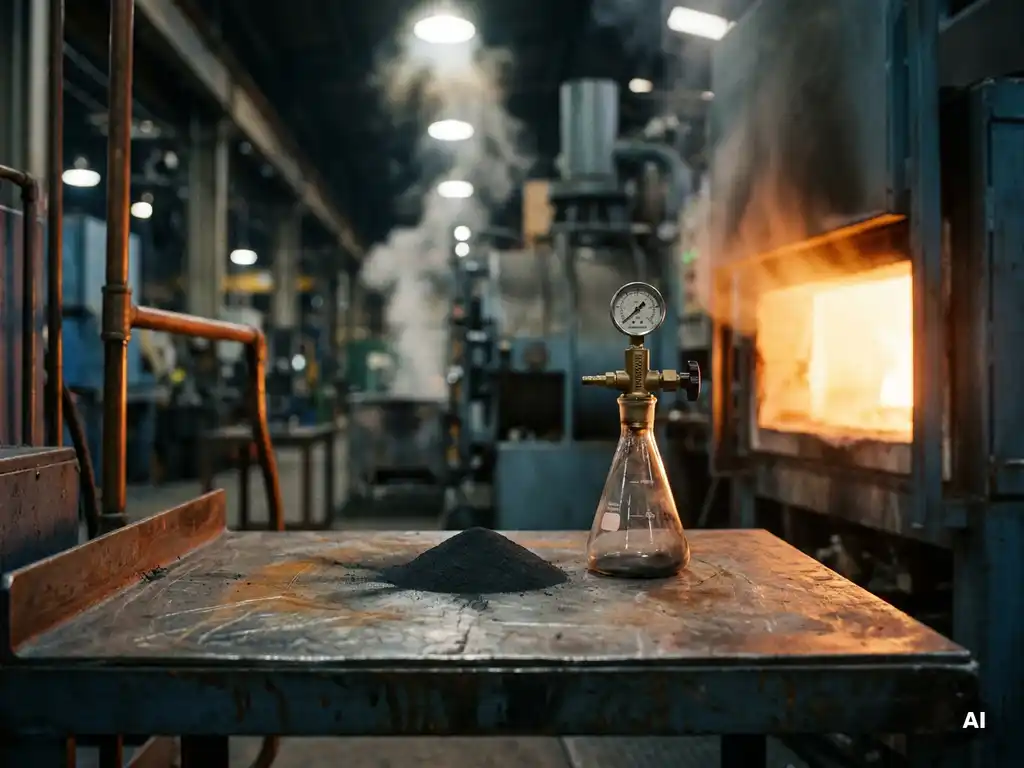
Iron fuel and hydrogen are both carbon-free energy carriers for industrial heat, but they work very differently in practice. The key distinction is how they store and deliver energy: hydrogen is a gas that requires pressurised infrastructure, while iron fuel is a solid powder that stores and releases energy through combustion and regeneration. For industrial companies evaluating decarbonisation options, that difference has real consequences for cost, safety, and operational fit. Below, we answer the most common questions side by side.
Which industries are better suited to iron fuel than hydrogen?
Iron fuel is particularly well suited to industries that need high-temperature process heat, operate independently of the electricity grid, and cannot easily accommodate the infrastructure demands of hydrogen. Food and beverage, specialty chemicals, and pulp and paper are the clearest examples, because they rely on continuous, reliable heat and often face grid constraints that make electrification impractical.
Hydrogen works best where it can be produced and consumed on-site or where dedicated pipelines already exist. For most industrial sites today, that infrastructure simply is not in place. Iron fuel, by contrast, can be transported in standard containers and stored like any dry bulk material, making it accessible to a much wider range of facilities without requiring major infrastructure investment.
Industries where iron fuel tends to outperform hydrogen as a near-term option include:
- Food and beverage – where steam generation is central and grid capacity is often limited
- Specialty chemicals – where high and consistent process temperatures are non-negotiable
- Pulp and paper – where large volumes of thermal energy are needed continuously
- Any sector where existing boiler infrastructure can be retained or adapted rather than replaced entirely
The common thread is that these sectors need a practical, drop-in-compatible solution that does not require a complete overhaul of existing systems. Iron fuel is designed precisely for that scenario.
How does iron fuel produce heat without emitting CO₂?
Iron fuel produces heat without emitting CO₂ because the combustion reaction involves iron powder and oxygen, not carbon. When iron burns, it oxidises to form iron oxide, releasing high-temperature heat in the process. There is no carbon in the fuel chain, so no carbon dioxide is produced during combustion itself.
This is fundamentally different from fossil fuels, where burning releases carbon that was stored in the fuel as CO₂. With iron, the only by-product of combustion is iron oxide, a solid material that stays inside the system and can be collected and reused.
The regeneration step closes the loop. Iron oxide is converted back into iron powder using hydrogen, which reacts with the oxide to produce iron and water vapour. When low-carbon hydrogen is used for this step, the full production chain achieves a CO₂ reduction of 0.55 tonnes of CO₂ equivalent per tonne of iron fuel, calculated using EU greenhouse gas methodology. It is important to note that this reduction figure applies specifically when low-carbon hydrogen, as defined under EU criteria, is used as the feedstock.
At the boiler level, the only CO₂ output at our current demonstration scale comes from a pilot safety flame, resulting in just 10 kg of CO₂ per megawatt-hour of thermal energy. That is a near-zero figure compared to natural gas or coal-fired heat. The Iron Fuel Technology cycle is designed to be fully circular: iron burns, iron oxide is recovered, and iron is regenerated, again and again.
What are the energy efficiency differences between iron fuel and hydrogen?
Our Iron Fuel Boiler achieves an energy efficiency of up to 95%, which is competitive with and often higher than many traditional fossil fuel systems. The Iron Fuel Production system, which converts hydrogen into iron fuel, operates at 86% energy efficiency. Together, these figures make Iron Fuel Technology a highly efficient pathway for delivering industrial heat.
Hydrogen used directly as a fuel for industrial heat faces its own efficiency challenges. Producing green hydrogen through electrolysis, transporting it under pressure, and then burning it in a modified burner involves multiple conversion steps, each of which carries energy losses. The overall well-to-heat efficiency of a hydrogen pathway depends heavily on the source of electricity, the efficiency of the electrolyser, and the losses associated with compression and distribution.
A practical comparison looks like this:
- Iron fuel production: Hydrogen is used to regenerate iron powder at 86% efficiency, and the resulting iron fuel burns in the boiler at up to 95% efficiency.
- Direct hydrogen combustion: Green hydrogen is produced via electrolysis, compressed, transported, and burned, with efficiency losses accumulating at each stage.
- Net result: Iron fuel offers a predictable, high-efficiency heat output with fewer infrastructure-related losses in the delivery chain.
For sustainability managers building a business case, efficiency matters because it directly affects the volume of fuel needed and therefore the total operating cost. Higher thermal efficiency means more usable heat per unit of energy input, which is an important factor when comparing decarbonisation options at scale.
Is iron fuel safer to store and transport than hydrogen?
Yes, iron fuel is significantly easier and safer to store and transport than hydrogen. Iron fuel is a dry, solid powder that can be handled in standard bulk containers, stored in ordinary warehouses, and transported using conventional freight infrastructure. It does not require pressurisation, cryogenic cooling, or specialised pipelines.
Hydrogen, on the other hand, is a highly flammable gas that must be stored either at very high pressure (typically 350 to 700 bar for industrial use) or at extremely low temperatures in liquid form (around minus 253 degrees Celsius). Both approaches require specialised equipment, trained personnel, and dedicated safety protocols. The infrastructure for large-scale hydrogen distribution is still being built in most regions, which is a practical barrier for many industrial sites today.
Iron fuel’s solid-state nature gives it several logistical advantages:
- No risk of leakage or pressure-related incidents during transport
- Compatible with existing bulk material handling systems
- Can be stored on-site without specialised containment infrastructure
- Stable at ambient temperature and pressure
For industrial operators, this translates into lower logistical complexity, reduced insurance and safety compliance costs, and greater flexibility in where and how fuel is stored. It is one of the reasons iron fuel can be deployed at sites where hydrogen infrastructure is not yet available or economically viable.
Can iron fuel and hydrogen work together in industrial decarbonisation?
Yes, iron fuel and hydrogen are not competing technologies but complementary ones. Hydrogen plays an essential role in the Iron Fuel Technology cycle: it is used to regenerate iron oxide back into iron powder after combustion. In this sense, hydrogen is the energy input that keeps the iron fuel cycle running, while iron fuel is the carrier that delivers that energy as high-temperature heat to industrial processes.
This relationship means that the growth of green hydrogen capacity directly benefits Iron Fuel Technology. As more low-carbon hydrogen becomes available, the carbon footprint of iron fuel production decreases further. The two technologies reinforce each other rather than competing for the same industrial application.
At the same time, iron fuel addresses a gap that hydrogen alone cannot fill today. Many industrial sites need heat now, and the hydrogen infrastructure required for direct combustion does not yet exist at the necessary scale or cost. Iron fuel can be deployed using existing boiler infrastructure and conventional logistics, making it a practical bridge technology that works alongside hydrogen rather than waiting for it.
For industrial companies, this means decarbonisation does not have to be an either-or choice. A site might use iron fuel for its primary heat generation while also investing in on-site or regional hydrogen production that feeds the iron fuel regeneration cycle, building towards a fully circular, fossil-free energy system over time. You can explore more about how these industrial decarbonisation solutions fit together in practice.
How RIFT helps you decarbonise industrial heat
We develop and deliver Iron Fuel Boilers built specifically for energy-intensive industries that need a reliable, carbon-free alternative to fossil fuel heat, without waiting for hydrogen infrastructure to catch up or the electricity grid to expand. Here is what working with us looks like in practice:
- Drop-in compatibility: Our Iron Fuel Boiler is designed to integrate with existing industrial setups, reducing the need for costly full-system replacements.
- Up to 95% energy efficiency: Our boiler system outperforms many traditional fossil fuel systems, helping you get more heat from every unit of energy.
- Near-zero direct CO₂ emissions: At demonstration scale (TRL7), the boiler produces just 10 kg of CO₂ per MWhth, coming solely from the pilot safety flame.
- Long-term fuel supply: We provide iron fuel as part of a long-term supply agreement, giving you cost predictability and operational continuity.
- Proven at industrial scale: Our technology is demonstrated at TRL7, and we have signed the world’s first commercial contract for industrial Iron Fuel Technology with Kingspan Unidek.
Whether you are in food and beverage, specialty chemicals, or pulp and paper, we are ready to help you build the business case for iron fuel. Learn more about our mission and team, or take the next step and get in touch with us to discuss how Iron Fuel Technology fits your decarbonisation roadmap.
Frequently Asked Questions
How long does it take to retrofit an existing boiler system to run on iron fuel?
The retrofit timeline depends on the size and configuration of your existing boiler infrastructure, but iron fuel is specifically designed for drop-in compatibility, which significantly reduces installation complexity compared to switching to hydrogen or full electrification. Because iron fuel works with adapted versions of existing combustion and heat transfer systems, many industrial sites can avoid a complete system replacement. The best starting point is a site assessment with RIFT to map your current setup against the integration requirements of the Iron Fuel Boiler.
What happens to the iron oxide after combustion — does it need to be disposed of?
Iron oxide does not need to be disposed of — it is the foundation of the circular fuel cycle. After combustion, the iron oxide by-product is collected and sent to an Iron Fuel Production facility, where it is regenerated back into iron powder using hydrogen. This closed-loop process means there is no waste stream to manage on-site, and the same iron material is reused cycle after cycle, making iron fuel a genuinely circular energy carrier.
What quality or source of hydrogen is needed to regenerate iron fuel, and does it have to be green hydrogen?
Iron fuel regeneration can technically use hydrogen from various sources, but the carbon footprint of the full iron fuel cycle depends directly on the carbon intensity of the hydrogen used. The 0.55 tonnes of CO₂ equivalent reduction per tonne of iron fuel cited in this post is calculated specifically when low-carbon hydrogen meeting EU criteria is used. Using grey or blue hydrogen would reduce — but not eliminate — the carbon benefit. As green hydrogen availability increases, the lifecycle emissions of iron fuel will continue to decrease, making it a future-proof choice even if you start with lower-carbon hydrogen today.
How does iron fuel pricing compare to natural gas, and what does the cost structure look like?
Iron fuel pricing is structured differently from natural gas because it operates as a long-term supply agreement rather than a commodity market purchase, which gives industrial operators greater cost predictability and protection from fossil fuel price volatility. The total cost of ownership also needs to account for avoided carbon costs, such as EU ETS allowances, which increasingly make fossil fuel heat more expensive over time. For a detailed cost comparison tailored to your site’s energy consumption and current fuel costs, a direct conversation with the RIFT team is the most reliable way to build an accurate business case.
Is iron fuel technology proven enough to commit to commercially, or is it still experimental?
Iron Fuel Technology is currently demonstrated at Technology Readiness Level 7 (TRL7), which means it has been validated at industrial scale in an operational environment — well beyond the laboratory or pilot stage. RIFT has also signed the world’s first commercial contract for industrial Iron Fuel Technology with Kingspan Unidek, providing real-world evidence of commercial viability. For industrial companies evaluating decarbonisation investments, TRL7 represents a meaningful level of technical maturity, with a clear path toward broader commercial deployment.
What scale of industrial heat demand is iron fuel suitable for — is it only viable for large facilities?
Iron fuel is designed for energy-intensive industrial applications that require continuous, high-temperature process heat, but it is not exclusively limited to the largest facilities. The key suitability factors are heat demand consistency, existing boiler infrastructure that can be adapted, and operational independence from the electricity grid — not facility size alone. Industries like food and beverage or specialty chemicals with mid-to-large scale thermal needs are strong candidates, and a site assessment with RIFT can quickly determine whether your facility’s heat profile is a good match.
What should we do first if we want to explore iron fuel as a decarbonisation option for our site?
The most effective first step is to map your current heat demand — specifically your temperature requirements, fuel consumption volumes, and existing boiler infrastructure — before entering any technology conversation. This gives you a clear baseline to evaluate iron fuel against your actual operational needs rather than generic specifications. From there, reaching out to RIFT directly allows their team to assess site compatibility, outline integration requirements, and help you build a business case grounded in your specific energy profile and decarbonisation targets.
Related Articles
- What does the Department of Energy do?
- What is VEKI?
- What is tidal energy and how does it work?
- What is energy independence and how do renewables enable it?
- What industries are most affected by the shift to renewable energy?
This content was generated with the help of AI and it may contain mistakes