

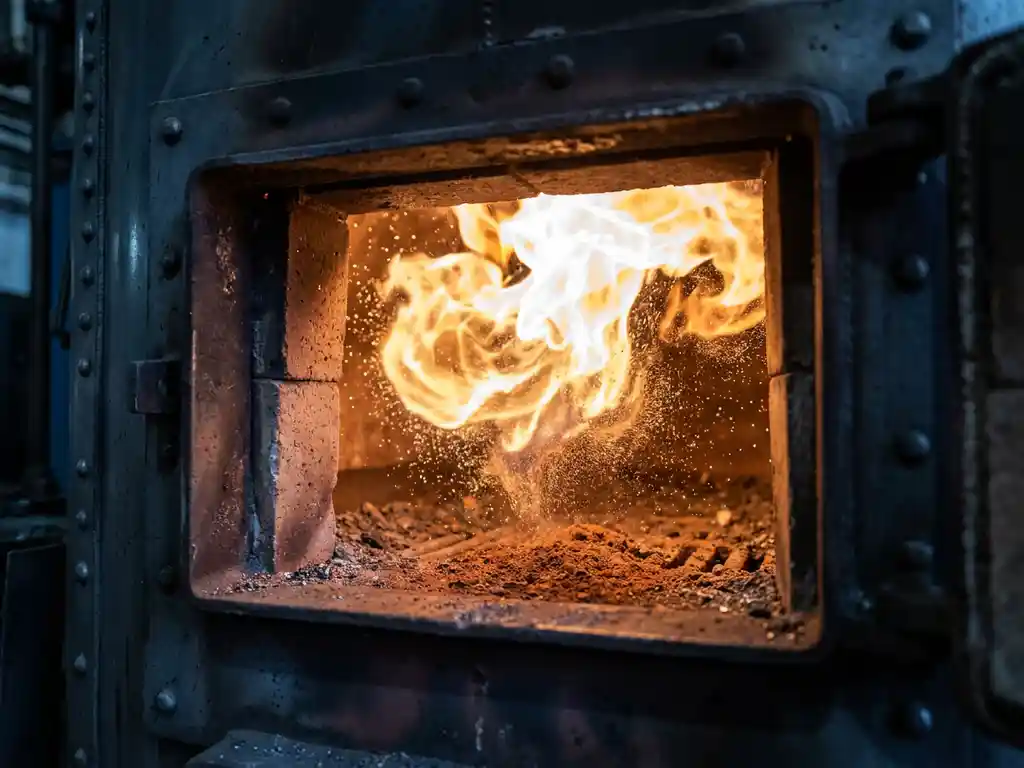
The future of energy storage technology is moving beyond batteries and pumped hydropower toward solid-state and chemical carriers that can store large amounts of energy for industrial use. Technologies like iron fuel, green hydrogen, and advanced thermal storage are emerging as practical answers to one of the hardest problems in decarbonization: how to store and deliver high-temperature heat without burning fossil fuels.
Sticking with fossil fuels for industrial heat is costing more than just emissions
Every year that industrial facilities continue running on natural gas or coal, they accumulate financial exposure through carbon pricing, rising fuel costs, and tightening regulatory requirements. The EU Emissions Trading System is making that cost increasingly visible on the balance sheet. At the same time, customers, investors, and boards are asking tougher questions about Scope 1 emissions. The fix is not necessarily a complete overhaul. Many newer energy storage and clean-heat technologies are designed to work alongside existing infrastructure, reducing the cost and disruption of the transition while still delivering measurable emissions reductions.
Waiting for the “perfect” renewable solution is holding back real decarbonization progress
Many sustainability managers are caught in a holding pattern, waiting for full electrification or green hydrogen to become cost-competitive and infrastructure-ready before committing to change. The problem is that, for high-temperature industrial heat, those options remain constrained in most locations today. That delay has a real cost: years of avoidable emissions and missed opportunities to build operational experience with cleaner technologies. A more productive approach is to evaluate what is commercially available now, at the right technology readiness level, and capable of integrating with what already exists on site.
What is energy storage technology and why does it matter?
Energy storage technology refers to any system that captures energy at one point in time and releases it later when it is needed. It matters because renewable energy sources like wind and solar generate power intermittently, and industrial processes require consistent, reliable heat and power. Storage bridges that gap, making clean energy practical at scale.
The most familiar forms of energy storage are batteries and pumped hydropower, but these are primarily suited to electricity. Industrial heat, which accounts for roughly two-thirds of all industrial energy consumption, requires a different kind of storage: one capable of delivering sustained, high-temperature output over extended periods.
This is where chemical and material-based energy carriers become relevant. Rather than storing electrons, they store energy in the form of chemical bonds, which can be released as heat when needed. This distinction is central to understanding why the future of renewable energy storage looks different for industry than it does for the power grid.
What are the main types of energy storage technologies available today?
The main types of energy storage technology include electrochemical storage (batteries), mechanical storage (pumped hydro, compressed air), thermal storage (molten salt, phase-change materials), and chemical storage (hydrogen, iron fuel, ammonia). Each type suits different applications, scales, and energy outputs.
- Lithium-ion batteries: Best suited for short-duration electricity storage, electric vehicles, and grid balancing. Not designed for high-temperature industrial heat.
- Pumped hydropower: Large-scale, long-duration electricity storage. Geographically constrained and not applicable to direct heat generation.
- Thermal storage: Stores heat directly using materials like molten salt or phase-change compounds. Useful for concentrated solar applications and some industrial processes.
- Hydrogen: A chemical energy carrier that can be burned or used in fuel cells. Requires significant infrastructure investment and presents storage and safety challenges at scale.
- Iron fuel: A solid-state chemical energy carrier using iron powder. Burns to produce high-temperature heat with zero direct CO2 emissions, and the resulting iron oxide is regenerated into iron fuel using hydrogen, completing a closed cycle.
For industrial heat specifically, chemical energy carriers are the most promising category because they can deliver the temperature levels and energy density that industrial processes require, without depending on a continuous electricity connection or major grid infrastructure upgrades.
How does iron fuel work as an energy storage solution?
Iron fuel works by storing energy in iron powder, which releases heat when it burns, producing only iron oxide as a byproduct. That iron oxide is then regenerated into iron powder using hydrogen, completing a circular cycle. The process stores and delivers energy without any direct CO2 emissions.
The cycle has four stages. First, iron powder is produced and transported to an industrial site as a safe, solid-state fuel. Second, the iron powder burns inside a boiler at temperatures up to 2,000 degrees Celsius, generating heat for steam, hot water, or hot air. Third, the iron oxide produced during combustion is collected and transported to a production facility. Fourth, the iron oxide is converted back into iron fuel using low-carbon hydrogen, ready to be used again.
This is why iron fuel is often described as functioning like a rechargeable battery, but for heat. The energy is stored in the chemical state of the iron, transported as a solid, and released on demand. You can learn more about how Iron Fuel Technology works and what makes it distinct from other clean energy approaches.
At our demonstration facility in Helmond, the Netherlands, the Iron Fuel Boiler operates at Technology Readiness Level 7 and achieves up to 95% energy efficiency. The only CO2 output comes from a small pilot safety flame, resulting in just 10 kg of CO2 per megawatt-hour of thermal energy, compared to the roughly 200 kg per megawatt-hour typical of natural gas combustion.
What’s the difference between hydrogen and iron fuel for industrial heat?
The key difference is physical state and infrastructure requirements. Hydrogen is a gas that requires pressurized storage, specialized pipelines, and significant safety measures. Iron fuel is a solid powder that can be stored in standard containers and transported using existing logistics. For most industrial sites, iron fuel is considerably easier to integrate.
Hydrogen also presents energy density challenges. Storing enough hydrogen on site to meet continuous industrial heat demand requires substantial infrastructure investment. Iron fuel, by contrast, has a high volumetric energy density in solid form, and the logistics are closer to those of coal or other solid fuels that many industrial sites already handle.
That said, hydrogen plays an important role in the iron fuel cycle itself. Hydrogen is the feedstock used to regenerate iron oxide into iron powder at the production facility. This means iron fuel does not eliminate hydrogen from the picture, but it does reduce the complexity that industrial operators face on site. The hydrogen challenge is handled upstream, at the production stage, rather than at the point of use.
For sustainability managers evaluating options, the practical question is not which technology is theoretically superior, but which one is deployable now, at their site, within their existing infrastructure. On that measure, iron fuel offers a meaningful advantage for many industrial heat applications.
Which energy storage technology is best for decarbonizing industrial heat?
No single technology is best for every situation, but for high-temperature industrial heat, solid-state chemical energy carriers like iron fuel are among the most practical options currently available. They deliver the temperatures industrial processes require, integrate with existing boiler infrastructure, and avoid the grid and pipeline constraints that limit electrification and hydrogen.
The right choice depends on several factors: the temperature levels required by the process, the site’s proximity to hydrogen or electricity infrastructure, the scale of heat demand, and the timeline for decarbonization. For processes requiring heat above 500 degrees Celsius, options narrow considerably. Electric boilers face efficiency and grid capacity limits. Biomass raises sustainability and supply chain concerns. Hydrogen combustion is technically viable but infrastructure-intensive.
Iron fuel addresses this gap directly. It is designed as a drop-in complement to existing fossil fuel boilers, meaning operators do not need to replace their entire heating system. The Iron Fuel Boiler integrates with what is already on site, reducing both capital expenditure and operational disruption. You can explore the full range of industrial heat decarbonization solutions to compare what fits your specific process requirements.
What does the future of energy storage technology look like by 2050?
By 2050, energy storage technology for industry is expected to be more diverse, more distributed, and more closely integrated with circular material flows. Chemical energy carriers, long-duration storage systems, and solid-state fuels will likely play a much larger role than they do today, particularly for industrial heat applications that cannot be electrified.
Several trends are shaping that future. Green hydrogen production is scaling, which will lower the cost of regenerating chemical energy carriers like iron fuel. Carbon pricing is rising across major economies, making clean alternatives increasingly cost-competitive. And industrial companies are under growing pressure from regulators, investors, and customers to show credible, measurable progress on Scope 1 emissions.
The companies that start building experience with clean-heat technologies now will be better positioned as those pressures intensify. Early adoption also provides operational data, supply chain relationships, and regulatory familiarity that later movers will have to acquire under more difficult conditions.
Our goal at RIFT is to help remove 1 gigaton of CO2 annually by 2050 through the deployment of Iron Fuel Technology. That ambition is grounded in a technology already demonstrated at industrial scale, backed by a commercially signed contract with Kingspan Unidek, and supported by a funding package of over 113 million euros.
How RIFT helps with industrial heat decarbonization
We provide a practical, commercially ready answer to one of the hardest parts of industrial decarbonization: replacing fossil fuels for high-temperature heat. Here is what we offer:
- Drop-in integration: Our Iron Fuel Boiler works alongside existing fossil fuel boilers, so you do not need to replace your entire heating system to start reducing emissions.
- Zero direct CO2 emissions: The combustion process produces no direct CO2, with ultra-low NOx emissions and up to 95% energy efficiency.
- Long-term fuel supply: We provide iron fuel under long-term supply agreements, giving you cost predictability and operational reliability.
- Proven at scale: Our technology is demonstrated at Technology Readiness Level 7, with the first commercial contract already signed.
- Full circular cycle: Iron oxide from combustion is regenerated into iron fuel using hydrogen, completing a closed-loop energy system with no waste.
If you are evaluating clean heat options for your facility and want to understand whether Iron Fuel Technology fits your process, get in touch with our team to start the conversation.
Related Articles
- What are the six sources of clean energy?
- What will replace fossil fuels in the future?
- What is the difference between solar and wind energy?
- How does solar energy work?
- What country has the least renewable energy?
This content was generated with the help of AI and it may contain mistakes