

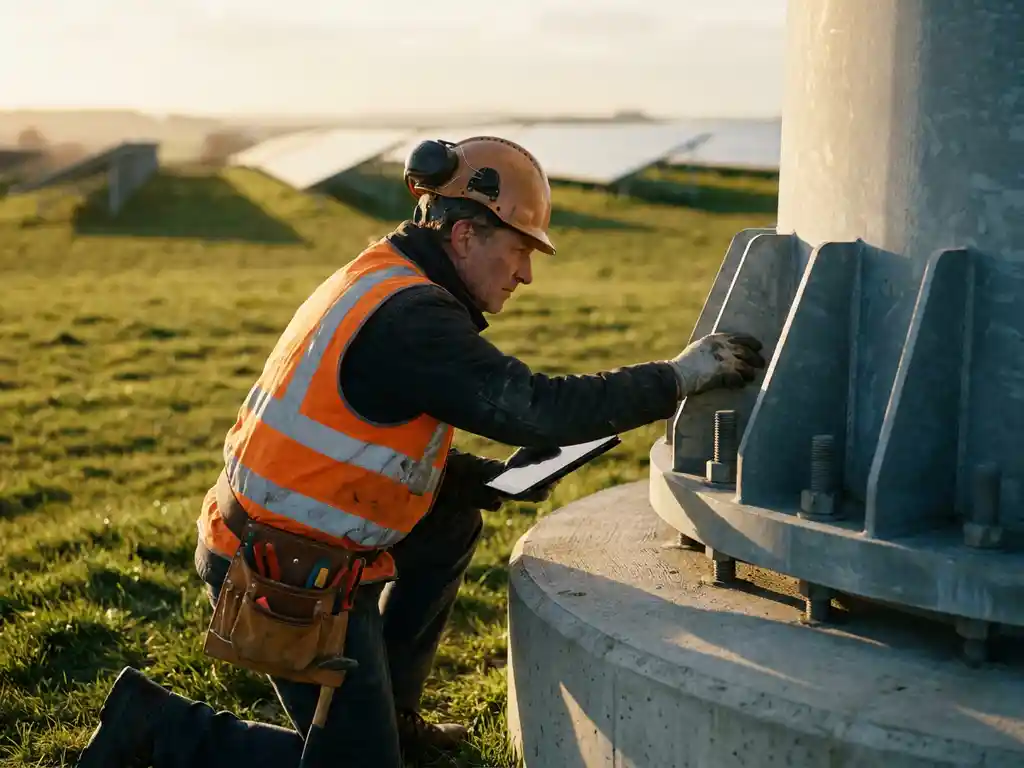
Renewable energy creates jobs by building entirely new industries around generating, storing, distributing, and maintaining clean power. Unlike fossil fuel extraction, which is heavily mechanised and concentrated in specific regions, renewable energy requires large workforces spread across manufacturing, installation, engineering, and operations. Research consistently shows that clean energy investments generate more jobs per unit of energy produced than coal, oil, or gas—making the transition economically significant beyond its environmental benefits.
Ignoring the job creation angle is costing the clean energy transition its biggest advocates
When the conversation around renewable energy focuses only on emissions and technology, it misses the argument that moves people most: economic opportunity. Communities facing industrial decline are not primarily motivated by carbon targets—they respond to job numbers, wage levels, and local investment. Without a clear, honest account of how clean energy employment works, policymakers, workers, and local leaders remain sceptical or disengaged. The fix is straightforward: ground the conversation in workforce data, regional examples, and the specific types of roles the transition creates—not just the megawatts installed.
Treating clean energy jobs as a single category obscures where the real growth is happening
Lumping all renewable energy employment together makes it hard to plan for, train toward, or invest in. Job growth in solar panel installation looks nothing like the engineering roles in offshore wind or the chemical process work emerging in clean fuel technologies. Each sector has different skill requirements, different regional footprints, and different wage profiles. Understanding the breakdown is what allows workers, educators, and employers to act on the opportunity rather than talk about it in the abstract.
What counts as a renewable energy job?
A renewable energy job is any role whose primary function supports the generation, storage, distribution, or maintenance of energy from renewable sources. This includes direct roles in solar, wind, hydro, geothermal, and emerging clean fuel technologies, as well as indirect roles in supply chains, manufacturing, and professional services that support those industries.
The definition matters because it shapes how employment figures are counted and compared. Some analyses include only direct installation and operations roles. Others extend the count to manufacturing workers who produce turbine components, engineers who design grid systems, and administrative staff at clean energy firms. Broader definitions produce larger totals, but even the narrowest accounting shows substantial and growing employment across the sector.
Roles that typically qualify include solar panel installers, wind turbine technicians, energy efficiency auditors, grid engineers, hydrogen production operators, and clean technology researchers. Supporting functions—logistics, procurement, legal, and finance roles within clean energy companies—are often counted in broader industry surveys.
How does renewable energy create jobs compared to fossil fuels?
Renewable energy generally creates more jobs per unit of energy produced than fossil fuels. This is because clean energy systems are more labour-intensive to build and maintain, while fossil fuel extraction relies heavily on capital-intensive machinery and automation. The manufacturing, installation, and servicing of renewable infrastructure require sustained human input at each stage.
Fossil fuel industries tend to concentrate employment in extraction regions, with relatively fewer workers needed once infrastructure is in place. A coal plant or oil field employs a comparatively small permanent workforce once operational. Renewable energy projects, by contrast, require ongoing maintenance crews, local supply chain workers, and regular equipment upgrades—distributing employment more broadly over time.
There is also a geographic dimension. Fossil fuel jobs cluster around natural resource deposits, which are fixed in location. Renewable energy projects can be sited almost anywhere with sufficient wind, sunlight, or biomass—meaning the employment benefits can reach regions that would never attract a refinery or mine.
Which renewable energy sectors employ the most workers?
Solar energy and wind power are the two largest employers in the renewable energy sector globally. Solar photovoltaic installation and manufacturing together account for a substantial share of clean energy jobs, driven by falling equipment costs and rapid deployment worldwide. Wind energy—both onshore and offshore—follows closely, with significant employment in turbine manufacturing, installation, and operations.
Beyond solar and wind, the following sectors contribute meaningfully to renewable energy employment:
- Energy efficiency: Retrofitting buildings and industrial facilities for lower energy use is one of the largest job categories in the broader clean energy economy.
- Hydropower: A mature sector with stable employment in operations and maintenance across regions with established infrastructure.
- Bioenergy: Includes agricultural supply chains, processing facilities, and distribution networks for biomass and biogas.
- Emerging clean fuels: Technologies such as green hydrogen and iron fuel are creating new categories of skilled industrial work, particularly in manufacturing and process operations.
- Grid and storage: Battery storage, smart grid technology, and transmission infrastructure are growing employment areas as grids adapt to variable renewable generation.
The relative size of each sector varies significantly by country, depending on policy support, natural resources, and the maturity of local industry.
What types of roles does the clean energy transition create?
The clean energy transition creates roles across four broad categories: skilled trades and technical installation, engineering and research, manufacturing and supply chain, and professional services. These span entry-level through senior positions and are not limited to any single industry background.
Installation and maintenance roles are among the most numerous. Electricians, plumbers, HVAC technicians, and equipment operators work across solar, wind, and heat technology projects. These are often well-paying, locally based jobs that cannot be offshored.
Engineering and research roles support technology development, system design, and performance optimisation. Clean energy companies—including those working on Iron Fuel Technology and other industrial decarbonisation solutions—employ mechanical, chemical, and electrical engineers alongside data scientists and environmental specialists.
Manufacturing creates jobs in component production: turbine blades, solar panels, heat exchangers, iron fuel production systems, and battery cells all require factory workers, quality control staff, and logistics teams. Professional services round out the picture, with lawyers, project finance specialists, sustainability consultants, and procurement managers all playing roles in scaling clean energy deployment.
Why do some regions benefit more from renewable energy jobs?
Regions benefit more from renewable energy jobs when they combine strong policy support, existing industrial infrastructure, and a workforce with transferable skills. Areas with a manufacturing heritage, port access for offshore wind, or proximity to renewable resource sites tend to attract more investment and retain more of the employment value chain locally.
Policy plays a decisive role. Governments that set clear renewable energy targets, offer investment incentives, and fund workforce training programmes create conditions that attract both domestic and international clean energy companies. Regions without this policy clarity often see projects built elsewhere, even when the physical resources are present.
Industrial history also matters. Communities with experience in engineering, chemical processing, or heavy manufacturing often find that their workforce skills transfer well to clean energy sectors. A region with a strong tradition in steel or chemicals, for example, is well positioned to host iron fuel production facilities or hydrogen infrastructure—sectors that require exactly those process engineering capabilities.
What skills are needed to work in renewable energy?
Working in renewable energy requires a combination of technical skills, practical trade qualifications, and, increasingly, digital and data competencies. The specific skills depend on the role, but the sector draws heavily from engineering, electrical work, mechanical trades, chemistry, and project management backgrounds.
The most in-demand skills across the sector currently include:
- Electrical and mechanical engineering: Core to designing, installing, and maintaining generation and storage systems.
- Process and chemical engineering: Essential for hydrogen production, industrial heat technologies, and clean fuel manufacturing.
- Project management: Large-scale renewable projects require experienced coordinators who can manage complex timelines, contractors, and regulatory requirements.
- Data analysis and digital systems: Smart grids, predictive maintenance, and performance monitoring all rely on workers who can interpret and act on operational data.
- Health, safety, and compliance: Particularly important in high-temperature industrial environments and offshore installations.
- Supply chain and logistics: Moving fuel, components, and equipment across complex networks requires specialist knowledge.
Many of these skills are transferable from fossil fuel industries, which is an important point for workers concerned about the transition. A technician who maintains gas boilers, for example, has directly applicable skills for maintaining industrial heat systems running on clean fuels. The gap is often narrower than it first appears, and targeted retraining programmes can bridge it effectively.
How RIFT contributes to clean energy job creation
We sit at the intersection of industrial decarbonisation and clean energy employment. Iron Fuel Technology creates jobs not just at RIFT, but across the supply chain—from iron powder production and hydrogen supply to boiler installation, maintenance, and fuel logistics. As the technology scales, so does the workforce required to support it.
For sustainability managers evaluating clean heat solutions for their operations, choosing Iron Fuel Technology means supporting a technology that:
- Creates skilled local jobs in manufacturing, operations, and maintenance.
- Integrates with existing industrial infrastructure, reducing disruption while adding clean energy capacity.
- Supports a circular fuel cycle—iron powder burns cleanly, iron oxide is regenerated using hydrogen, and the process repeats with zero direct CO₂.
- Delivers up to 95% energy efficiency, making it one of the most effective clean heat options available for high-temperature industrial processes.
If you want to understand how Iron Fuel Technology fits into your decarbonisation roadmap and what it means for your operations, get in touch with our team to start the conversation.
Related Articles
- What is an EIA assessment?
- What is tidal energy and how does it work?
- What are the main types of renewable energy?
- How does hydropower generate electricity?
- How much of America's energy is clean?
This content was generated with the help of AI and it may contain mistakes