

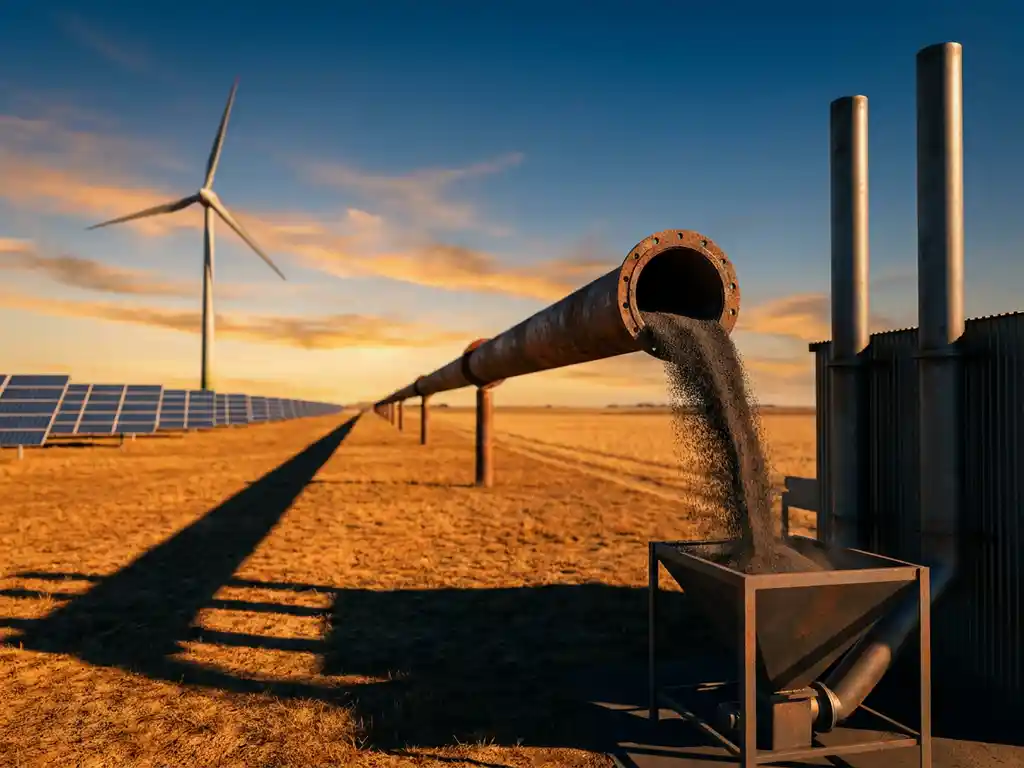
Yes, renewable energy can meaningfully reduce dependence on energy imports. By shifting from imported fossil fuels to locally produced or domestically sourced clean energy carriers, countries and industries can reduce their exposure to volatile global fuel markets. Renewable sources like solar and wind, as well as emerging technologies such as iron fuel, offer pathways to produce energy closer to where it is consumed, reducing both geopolitical risk and long-term cost uncertainty.
Fossil fuel price swings are hitting industrial budgets harder than most realise
When natural gas prices spike, industrial operators feel it immediately. Process heat accounts for a substantial share of operating costs in sectors like food production, chemicals, and paper manufacturing, and nearly all of it still runs on imported fossil fuels. A disruption in supply chains, a geopolitical conflict, or a cold winter can send energy costs soaring with very little warning. The solution is not to find a cheaper fossil fuel supplier. It is to reduce how much imported fuel you need in the first place by introducing clean energy carriers that can be sourced, stored, and priced independently of global commodity markets.
Sticking with fossil fuels is putting your decarbonisation targets out of reach
Regulatory pressure is accelerating. The EU Emissions Trading System is expanding its reach, carbon prices are rising, and board-level net-zero commitments are turning into hard deadlines. For sustainability managers in energy-intensive industries, continued reliance on imported fossil fuels for process heat is not just a cost problem. It is a compliance and reputational risk. The practical next step is to start evaluating clean heat technologies that can work within your existing infrastructure, rather than waiting for a perfect solution that requires a complete rebuild.
Why are industries so dependent on energy imports?
Industries are dependent on energy imports because fossil fuels, particularly natural gas and oil, remain the dominant source of high-temperature process heat, and most countries do not produce enough of these fuels domestically to meet industrial demand. The global fossil fuel supply chain has been optimised over decades, making it cheap and convenient, but also creating structural dependency that is difficult to unwind quickly.
Industrial heat generation requires fuels that are energy-dense, reliable, and capable of reaching very high temperatures. For most of the twentieth century, fossil fuels were the only practical option. Infrastructure, equipment, and procurement contracts were all built around them. Switching away requires not just a new fuel source, but also new technology, new supply agreements, and often significant capital investment.
Geopolitical events in recent years have made this dependency more visible and more costly. Energy security has moved from a background concern to a boardroom priority, pushing industries to look seriously at alternatives that reduce exposure to imported fuel markets.
What role does industrial heat play in energy import dependency?
Industrial heat is one of the largest drivers of energy import dependency. Two-thirds of all industrial energy consumption goes toward heat generation, and around 80% of that heat is still produced by burning fossil fuels, most of which are imported. This makes industrial heat a central pressure point in any serious effort to reduce a country’s or a company’s reliance on energy imports.
Unlike electricity, which can be generated from a growing range of domestic renewable sources, high-temperature industrial heat has been much harder to decarbonise. Processes in food and beverage production, specialty chemicals, and pulp and paper manufacturing require consistent, high-grade heat that cannot easily be replaced by solar panels or wind turbines alone.
This is why decarbonising industrial heat is not just an environmental issue. It is an energy security issue. Every megawatt-hour of process heat produced from a domestically sourced or locally regenerated clean fuel is one less megawatt-hour that needs to be imported as natural gas or oil.
How can renewable energy technologies reduce reliance on imported fossil fuels?
Renewable energy technologies reduce reliance on imported fossil fuels by replacing them as the primary input for energy generation. When heat or power is produced from wind, solar, green hydrogen, or clean solid fuels like iron powder, dependency on international fossil fuel supply chains shrinks. The key is matching the right renewable technology to the specific energy need, particularly for industrial heat, where requirements are demanding.
For electricity generation, solar and wind have already made significant progress in displacing imported fuels. But industrial heat presents a different challenge. The temperatures required, the continuity of supply needed, and the existing infrastructure in place all shape which renewable technologies are viable in practice.
Green hydrogen is one option that has attracted significant attention. It can be produced domestically using renewable electricity and used as a fuel for industrial processes. However, infrastructure requirements and cost remain barriers for many operators today. Other approaches, such as clean solid fuel carriers that can be stored and transported without specialist infrastructure, are emerging as practical complements or alternatives.
What is iron fuel and how does it work as a clean energy carrier?
Iron fuel is fine iron powder that functions as a solid-state, carbon-free energy carrier. When burned, it releases high-temperature heat with zero direct CO₂ emissions. The only by-product is iron oxide, which can be collected and regenerated back into iron fuel using hydrogen, completing a closed, circular cycle. It works like a rechargeable battery, but for industrial heat.
The combustion process generates flame temperatures of up to 2,000°C, making iron fuel suitable for the high-temperature heat demands of industries like food and beverage, specialty chemicals, and pulp and paper. The boiler system achieves an energy efficiency of up to 95%, and total CO₂ output from the system amounts to just 10 kg per megawatt-hour of thermal energy, attributable only to the pilot safety flame rather than the combustion of iron itself.
What makes iron fuel particularly relevant to energy import dependency is its supply chain profile. Iron powder is a widely traded commodity available from multiple sources globally. It can be stored safely under ambient conditions and transported using existing logistics infrastructure. This gives industrial operators much more flexibility and resilience compared to natural gas, which requires pipelines or LNG terminals and is subject to the price volatility of international energy markets.
To understand the full technology cycle in more detail, the Iron Fuel Technology overview explains how each stage of the process works, from production through combustion and back again.
Which renewable energy option is best suited for industrial heat?
No single renewable energy option is best for all industrial heat applications. The right choice depends on the temperature required, existing infrastructure, available capital, and the local energy context. For very high-temperature processes where electrification is impractical and hydrogen infrastructure is not yet in place, clean solid fuel carriers like iron fuel offer a practical and cost-competitive path forward.
Electric boilers and heat pumps work well for lower-temperature applications and where grid capacity is sufficient. But for industries that need consistent heat above 500°C, or where grid connections cannot support the load, electrification alone is often not viable in the near term.
Green hydrogen can theoretically replace natural gas in burners, but the cost of green hydrogen remains high, and the infrastructure for storage and distribution is still developing in most regions. For many industrial operators, hydrogen is a future option rather than an immediate one.
Iron fuel occupies a different position. It is a solid fuel that burns like a conventional fuel but produces no direct carbon emissions. It integrates with existing boiler infrastructure without requiring a complete overhaul, which significantly lowers the barrier to adoption for companies that cannot afford extended downtime or major capital expenditure right now.
How can manufacturers start reducing their dependence on energy imports?
Manufacturers can start reducing energy import dependency by auditing their current heat demand, identifying which processes are most exposed to fossil fuel price risk, and evaluating which clean heat technologies are compatible with their existing setup. The most practical starting point is usually a technology that can work alongside existing equipment rather than replacing it entirely.
A structured approach helps avoid getting stuck in evaluation without progress. Consider the following steps:
- Map your heat demand by temperature range and volume to understand where fossil fuels are most heavily used.
- Identify which processes are candidates for clean heat integration based on temperature requirements and infrastructure constraints.
- Evaluate clean heat technologies against your specific operational profile, including upfront investment, fuel supply reliability, and emissions reduction potential.
- Engage with technology providers early to understand what integration looks like in practice, including lead times and supply agreements.
- Build the internal business case by linking emissions reductions to regulatory compliance, carbon cost exposure, and long-term energy price risk.
Starting with a partial substitution—replacing a portion of fossil fuel consumption with a clean alternative—is often more achievable than a full transition and still delivers meaningful emissions reductions and cost resilience. The clean heat solutions available today are increasingly designed to complement rather than replace existing systems, which makes the first step smaller than many sustainability managers expect.
How Iron Fuel Technology helps reduce dependence on energy imports
We developed Iron Fuel Technology specifically to address the gap that electrification and hydrogen cannot yet fill for many industrial operators. Here is what it offers in practice:
- Zero direct CO₂ emissions from combustion, with ultra-low NOx, supporting Scope 1 reduction targets immediately.
- Drop-in compatibility with existing boiler infrastructure, so adoption does not require a complete rebuild or extended downtime.
- A stable, diversified fuel supply sourced from the global iron powder market, reducing exposure to gas price volatility and import dependency.
- Up to 95% energy efficiency, making it cost-competitive with fossil fuel alternatives over the operational lifetime of the system.
- A circular fuel cycle in which iron oxide is regenerated back into iron fuel using hydrogen, keeping the energy carrier in a closed loop.
We have already signed the first commercial contract for industrial Iron Fuel Technology, with delivery of an Iron Fuel Boiler and a long-term fuel supply agreement in place. If you are evaluating clean heat options for your facility, we are ready to talk through what integration could look like for your specific situation. Get in touch with our team to start the conversation.
Related Articles
- Will EU ETS carbon prices keep rising and what does that mean for industry?
- What is green hydrogen and how is it produced?
- What are the biggest challenges of switching to renewable energy?
- How does offshore wind energy work?
- What industries are most affected by the shift to renewable energy?
This content was generated with the help of AI and it may contain mistakes