

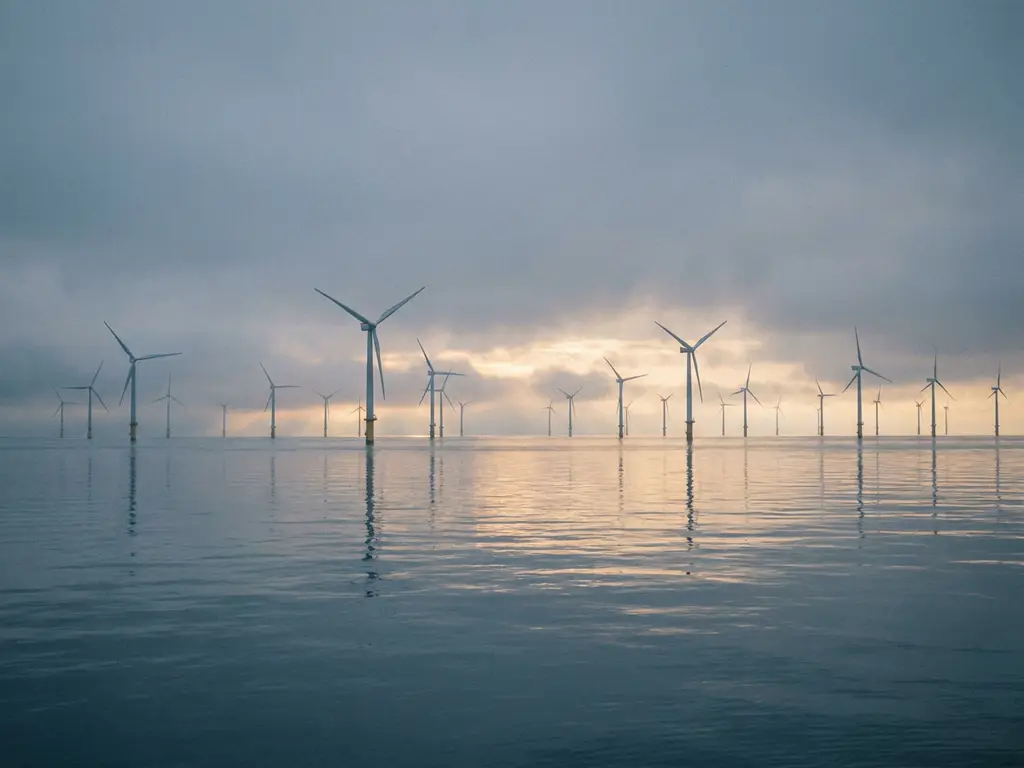
Europe’s energy transition is the continent’s shift away from fossil fuels toward clean, renewable energy sources—driven by binding climate targets, energy security concerns, and the need to reduce greenhouse gas emissions across every sector of the economy. The transition spans electricity generation, transport, buildings, and industry, and is backed by a growing set of EU policies, funding mechanisms, and technology investments designed to reach net-zero emissions by 2050.
Delaying industrial decarbonisation is already costing European companies more than they realise
The EU Emissions Trading System is tightening every year, meaning the cost of doing nothing is rising in real terms. Companies that have not yet started reducing Scope 1 emissions from heat-intensive processes are increasingly exposed to carbon pricing, tighter regulatory requirements, and growing pressure from customers and investors. The fix is not always a full infrastructure overhaul. For many operations, the most practical starting point is replacing or supplementing fossil-fuel boilers with clean alternatives that work within existing setups—reducing emissions without halting production.
Waiting for a single silver-bullet technology is holding back your decarbonisation progress
Many sustainability managers are stuck in evaluation mode, waiting for one technology to emerge as the clear winner before committing. But the energy transition does not work that way. Europe’s industrial heat challenge is too large and too varied for any single solution to address alone. Electrification works in some contexts, hydrogen in others, and emerging carriers like iron fuel in others still. The practical move is to assess which technology fits your specific process temperatures, infrastructure, and cost structure—and start there, rather than waiting for perfect conditions that may never arrive.
What is Europe’s energy transition and why does it matter?
Europe’s energy transition is the large-scale restructuring of how the continent produces and uses energy. It means replacing coal, oil, and gas with renewable and low-carbon alternatives across electricity, heat, transport, and industry. It matters because energy use is the dominant source of Europe’s greenhouse gas emissions, and meeting the EU’s climate commitments requires deep, economy-wide change.
The transition is not just an environmental project. It is also a strategic response to energy insecurity. Europe’s dependence on imported fossil fuels—made stark by the disruptions of recent years—has accelerated the political will to build a more self-sufficient, clean energy system. Renewable energy, by contrast, is largely domestic and increasingly cost-competitive.
For industrial companies in particular, the transition creates both pressure and opportunity. Pressure, because regulations are tightening and carbon costs are rising. Opportunity, because companies that move early on clean heat and low-emission processes are better positioned for the decade ahead.
What are Europe’s main climate and energy targets?
Europe’s central climate target is net-zero greenhouse gas emissions by 2050, enshrined in the European Climate Law. The intermediate target is a 55% reduction in net emissions by 2030 compared with 1990 levels, under the Fit for 55 package. On renewable energy specifically, the EU has set a binding target of 42.5% of total energy consumption from renewable sources by 2030.
These targets cascade into sector-specific rules and mechanisms. The EU Emissions Trading System puts a price on carbon for energy-intensive industries. The Energy Efficiency Directive pushes companies to reduce overall consumption. The Industrial Emissions Directive sets limits on pollutants from large industrial installations.
Together, these policies create a regulatory environment in which the cost of remaining fossil-fuel-dependent is rising steadily. For sustainability managers, understanding these targets is not just background knowledge—it directly shapes the business case for investing in clean heat technologies now rather than later.
How does Europe plan to decarbonise industrial heat?
Europe plans to decarbonise industrial heat through a combination of electrification, green hydrogen, energy efficiency improvements, and emerging clean-fuel technologies. The European Commission has identified industrial heat as a priority decarbonisation challenge, given that it accounts for a substantial share of total industrial energy demand and is still overwhelmingly powered by fossil fuels.
The policy toolkit includes direct funding through mechanisms like the EU Innovation Fund, which supports the scale-up of innovative low-carbon technologies. It also includes carbon pricing through the ETS, which makes fossil-fuel heat progressively more expensive and improves the relative economics of clean alternatives.
On the technology side, the approach is deliberately pluralistic. No single solution is expected to decarbonise all industrial heat. High-temperature processes that cannot easily be electrified are a particular focus, and technologies that can deliver clean heat at the temperatures industry actually needs—without requiring complete infrastructure replacement—are attracting significant attention and investment across Europe.
What are the biggest challenges facing Europe’s energy transition?
The biggest challenges are the speed and cost of the transition, the complexity of decarbonising heat and heavy industry, and the infrastructure gaps that limit how quickly clean technologies can be deployed at scale. Renewable electricity has made strong progress, but the harder parts of the energy system—industrial heat, long-distance transport, energy storage—remain largely unsolved.
Several specific barriers stand out:
- Infrastructure limitations: Hydrogen pipelines, grid capacity, and storage facilities are not yet built out at the scale the transition requires.
- High upfront costs: Clean technologies often carry significant capital costs that are difficult to justify against still-cheap fossil fuels, even as carbon prices rise.
- Technology readiness: Some clean heat solutions are still maturing, creating uncertainty for companies making long-term investment decisions.
- Skills and workforce: Deploying new energy technologies requires expertise that is not always available in the regions where it is needed most.
- Regulatory fragmentation: While EU-level targets are clear, implementation varies significantly across Member States, creating an uneven playing field.
For industrial companies, the most immediate challenge is often practical: finding a clean heat solution that works with existing equipment, does not require years of infrastructure build-out, and delivers a credible return on investment. That gap between ambition and operational reality is where many decarbonisation plans stall.
Which European sectors face the most pressure to decarbonise?
The sectors under the most pressure are those with high energy intensity and significant direct emissions: steel and metals, cement, chemicals, pulp and paper, and food and beverage processing. These industries rely heavily on high-temperature heat, making them difficult to decarbonise through electrification alone, and they face direct exposure to EU carbon pricing through the ETS.
The pressure comes from multiple directions at once. Regulatory costs are rising as free ETS allowances are phased out. Customers and investors are increasingly asking for credible decarbonisation plans. And companies with operations in multiple countries face growing reporting obligations under frameworks like the Corporate Sustainability Reporting Directive.
Food and beverage, specialty chemicals, and pulp and paper are particularly relevant cases. These sectors require consistent, high-temperature heat for core production processes, and many facilities are not well-suited to full electrification. They need clean heat solutions that can integrate into existing operations without disrupting output—which is exactly the kind of challenge that is driving interest in alternative fuel technologies across Europe.
What clean energy technologies are emerging in Europe?
The clean energy technologies gaining the most traction in Europe include offshore and onshore wind, solar photovoltaics, green hydrogen, advanced heat pumps, and a growing range of industrial fuel alternatives. For industrial heat specifically, hydrogen combustion, biomass, and solid-state energy carriers like iron fuel are all being developed and demonstrated at scale.
Green hydrogen is attracting major investment, but its deployment is constrained by the pace of electrolyser build-out and the cost of renewable electricity. Heat pumps work well for lower-temperature processes but struggle with the high-temperature heat that many industrial applications require. Biomass has sustainability limitations that are increasingly scrutinised under EU policy.
Iron fuel is one of the more distinctive technologies emerging from European research. Developed at Eindhoven University of Technology and now being commercialised, it uses iron powder as a circular energy carrier that burns without CO₂ emissions and is regenerated from iron oxide using hydrogen. You can read more about how Iron Fuel Technology works to understand the full cycle in detail.
What makes it relevant in the European context is its compatibility with existing boiler infrastructure. Rather than replacing entire industrial heating systems, it is designed to work alongside them—reducing the capital barrier that often slows adoption of clean heat technologies. The EU Innovation Fund has recognised this potential, contributing to RIFT’s recent funding package as part of Europe’s broader push to scale innovative industrial decarbonisation solutions.
How RIFT helps with Europe’s energy transition
At RIFT, we are directly addressing one of the hardest parts of Europe’s energy transition: decarbonising industrial heat. Our Iron Fuel Boiler delivers high-temperature, carbon-free heat using iron powder as a fuel—with zero direct CO₂ emissions and ultra-low NOₓ output. Here is what that means in practice for industrial operators:
- Drop-in compatibility: Our boiler integrates with existing infrastructure, so you do not need to rebuild your heating setup from scratch.
- High efficiency: The Iron Fuel Boiler achieves up to 95% energy efficiency, outperforming many conventional fossil-fuel systems.
- Reliable fuel supply: We provide long-term fuel supply agreements, giving your operation the certainty it needs to plan ahead.
- Proven at scale: Our technology is demonstrated at TRL 7—industrial megawatt scale—at our facility in Helmond, the Netherlands.
- Circular by design: Iron oxide, the only combustion by-product, is regenerated back into iron fuel using low-carbon hydrogen, completing a closed loop.
If you are evaluating clean heat solutions for your industrial operation and want to understand whether iron fuel fits your process, we are ready to talk through the specifics with you. Get in touch with our team to start the conversation.
Related Articles
- How can I access EIA data?
- What are the biggest challenges of switching to renewable energy?
- What is the carbon footprint of manufacturing solar panels?
- How does renewable energy impact electricity prices?
- Which country is closest to net zero?
This content was generated with the help of AI and it may contain mistakes